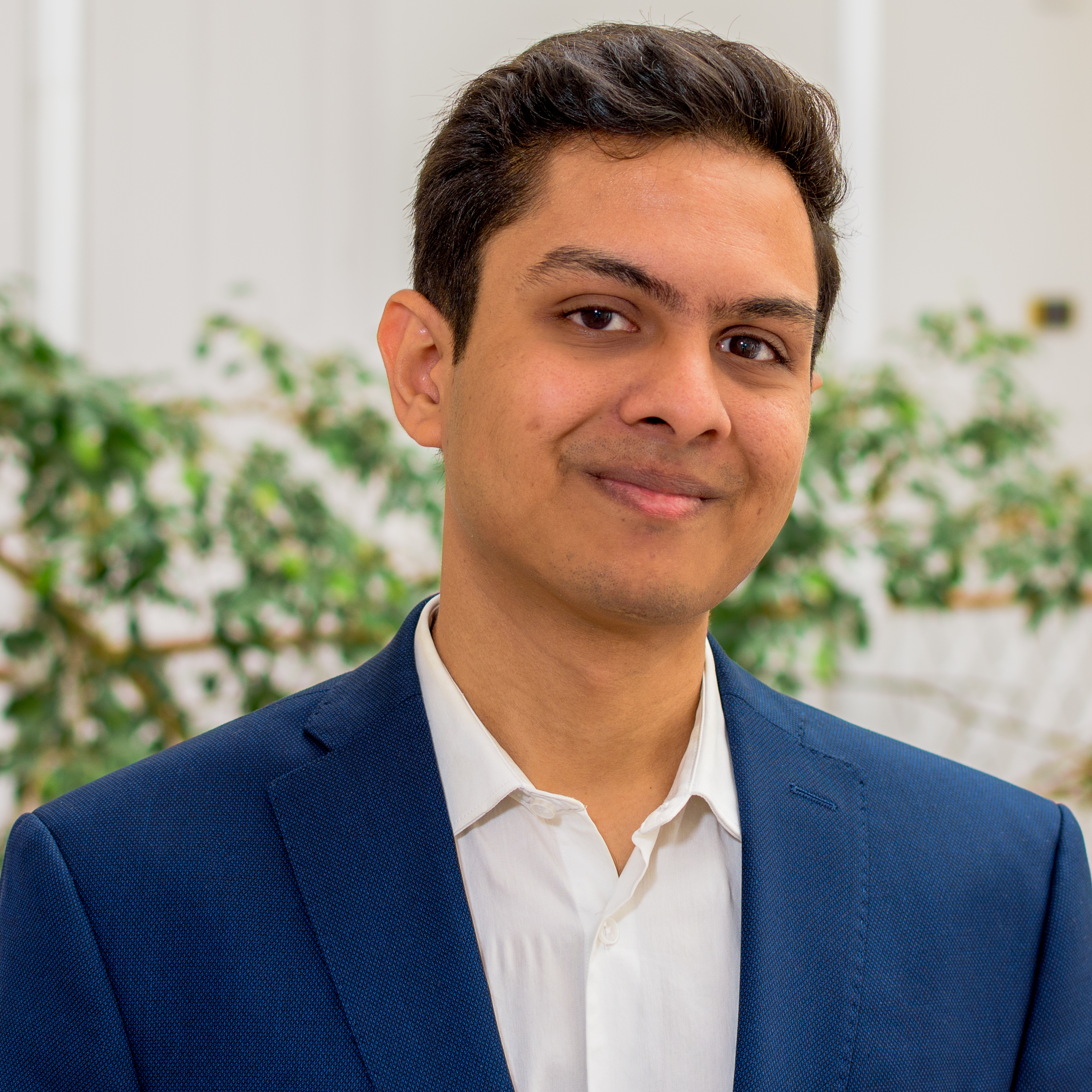
I am an Assistant Professor at the Centre for Advanced Financial Research and Learning (CAFRAL), an institution promoted by the Reserve Bank of India. I received my PhD in Economics from CEMFI. My research interests are in the fields of banking, corporate finance, and macroeconomics.
Working papers
Fair-Value Capital and Bank Solvency over the Monetary Policy Cycle
(w/ J. Schaefer)
September 2026
Abstract
We develop a quantitative general equilibrium model of banks that issue credit-risky
loans and invest in interest rate-sensitive securities to study how including unrealized
securities gains and losses in regulatory capital affects lending and solvency over
the monetary policy cycle. Regulatory accounting rules generate asymmetric effects
across the cycle. During tightening, including valuation changes in regulatory capital
substantially reduces bank failures while only moderately contracting credit. During
easing, it substantially expands credit while only moderately increasing failures. The
asymmetry arises from the interaction of credit and interest rate risk. Welfare gains
from incorporating valuation changes are modest.
Optimal deposit insurance in a macroeconomic model with runs
November 2024
Abstract
This paper examines the effects of deposit insurance in a quantitative macroeconomic model that incorporates the risk of deposit runs faced by banks. During systemic panic episodes, alert uninsured depositors tend to withdraw their funds from banks they perceive as vulnerable. While deposit insurance reduces banks' susceptibility to such runs, it may also weaken their risk management incentives, resulting in a U-shaped relationship between insurance coverage and the risk of bank failure. The model suggests that the welfare-maximizing level of deposit insurance coverage for the U.S. in 2008 closely aligns with the observed level. A moderate increase in coverage may be optimal in contexts of heightened depositor alertness—driven by technological or demographic factors—, greater fiscal capacity or stronger capital requirements.
Climate conscious investors, carbon disclosures, and efficiency
(w/ J. Suarez)
June 2024
Abstract
We analyze whether carbon disclosures can substitute for carbon emission taxation when emissions generate negative externalities. In our setup, climate conscious investors adjust their funding terms based on their beliefs about firms' carbon intensities, which firms can choose to disclose at a cost. In equilibrium, the least carbon-intensive firms disclose and are financed at terms based on their carbon intensity, while non-disclosing firms are financed at more expensive pooling terms. Encouraging disclosures reduces investment and therefore emissions by non-disclosing firms, but may increase investment and emissions by newly disclosing firms, overall having ambiguous effects on total emissions and social welfare.
Teaching
Corporate Finance and Banking
(Graduate)
2025, 2026 IGIDR
Corporate Finance
(Graduate)
2023, 2024 CEMFI (Teaching Assistant)
Uncertainty and Information
(Graduate)
2022 CEMFI (Teaching Assistant)